Modern SEO is no longer just about inserting keywords into content. Search engines have become far better at understanding what users actually want when they type a query. If your content doesn’t match that expectation, rankings rarely last. This is where a structured Search Intent Mapping approach becomes critical.
For businesses investing in seo services or working with a seo agency, understanding how intent connects to keywords, content, and site structure is the difference between traffic that converts and traffic that disappears.
Let’s break down how a Search Intent Mapping strategy works and how it fits into modern SEO practices.
What Search Intent Really Means in Modern SEO
Search Intent refers to the goal behind a user’s search query. When someone searches on Google, they are trying to accomplish something. It could be learning information, comparing products, or completing a purchase.
Search engines analyze billions of searches to understand these goals. Their algorithms then prioritize content that best satisfies that intent.
The most common categories of Search Intent include:
- Informational intent – Users want to learn something
- Navigational intent – Users want to find a specific website or brand
- Commercial intent – Users are comparing options
- Transactional intent – Users are ready to take action or buy
A strong Search Intent Mapping strategy connects each keyword with the intent behind it, then aligns content accordingly.
Why Search Intent Mapping Is Critical for Modern SEO
Search engines increasingly prioritize relevance over simple keyword presence. Pages that perfectly match user intent often outrank pages with stronger backlink profiles but weaker relevance.
A structured Search Intent Mapping process helps businesses:
- Improve content relevance
- Increase organic click-through rates
- Reduce bounce rates
- Improve engagement signals
- Support conversion-focused SEO
When done properly, Search Intent Optimization ensures that every page on a website serves a clear purpose within the search ecosystem.
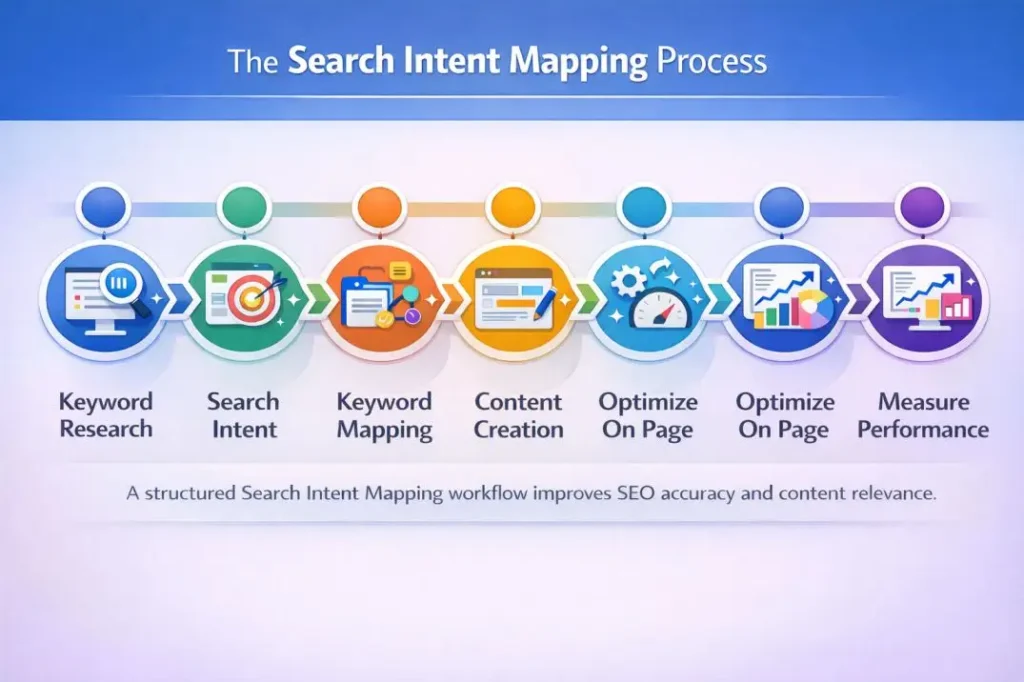
How Search Intent Mapping Works
A successful Search Intent Mapping framework connects four main components:
- Keyword research
- Intent classification
- Keyword Mapping to pages
- Content and on-page alignment
Each stage ensures that your SEO strategy matches how users actually search.
Step 1: Intent Based Keyword Research
Traditional keyword research focuses heavily on search volume. Modern SEO focuses on understanding why people search.
During research, look for patterns in user queries that indicate intent. For example:
| Informational searches includes | Commercial queries includes | Transactional queries includes |
| how | best | buy |
| guide | comparison | pricing |
| tips | review | quote |
| strategy | tools | Near me |
| examples | services | – |
When Search Intent is clearly identified during keyword research, it becomes much easier to build a structured Search Intent Mapping system.
Step 2: Classify Keywords by Search Intent
Once keywords are collected, they should be grouped based on the type of intent they represent.
For example:
Informational intent keywords
- SEO strategy guide
- what is Search Intent
- how Search Intent Mapping works
- SEO tips for beginners
These keywords typically require educational blog content.
Commercial intent keywords
- best seo agency
- top seo services for businesses
- SEO tools comparison
- digital marketing services comparison
These searches are often best served by comparison pages or detailed service content.
Transactional intent keywords
- hire seo agency
- affordable seo services
- SEO pricing packages
- request SEO consultation
These keywords usually perform best with service landing pages.
This classification stage ensures Search Intent Optimization aligns with how people search at different stages of the buying journey.
Step 3: Build a Keyword Mapping Structure
After identifying intent, the next step is Keyword Mapping.
Keyword Mapping assigns specific keywords to specific pages on your website. This prevents keyword cannibalization and ensures every page has a defined role in the SEO strategy.
A simple mapping structure might look like this:
- Blog article targeting informational intent
- Service page targeting transactional intent
- Comparison page targeting commercial intent
- Resource hub targeting broad informational queries
This process ensures that every keyword has a clear destination.
Step 4: Use Topic Clusters to Organize Content
One of the most effective ways to strengthen Search Intent Mapping is through Topic Clusters.
Topic Clusters organize related content around a central pillar topic. This helps search engines understand your expertise in a subject area.
A typical cluster structure might include:
Pillar page
- Complete guide to SEO strategy
Supporting cluster pages
- guide to Search Intent Optimization
- keyword research strategies
- content optimization techniques
- technical SEO fundamentals
Internal linking between these pages helps distribute authority and improve rankings.
Step 5: Optimize On Page Elements for Search Intent
Once keywords and content structure are mapped, the next step is to Optimize On-Page elements so they clearly match the user’s intent.
Important on-page optimization areas include:
- Page titles and meta descriptions
- Heading structure
- internal linking
- content formatting
- structured data
To effectively Optimize On-Page, ensure the page answers the question behind the search query quickly.
For example, informational pages should prioritize:
- clear explanations
- step-by-step guides
- supporting visuals
- helpful examples
Transactional pages should prioritize:
- service explanations
- benefits
- pricing information
- clear calls to action
This alignment is a core part of Search Intent Optimization.
SERP Analysis as Part of Intent Mapping
One area many SEO guides overlook is SERP analysis. Before creating content, analyze what search engines already rank for a keyword.
Look for patterns such as:
- blog posts dominating results
- product pages ranking higher
- videos appearing in results
- featured snippets appearing
These patterns reveal what search engines believe users want.
If a keyword mostly returns guides and educational content, trying to rank a service page will likely fail.
Understanding this relationship strengthens Search Intent Mapping decisions.
The Role of User Experience in Search Intent Optimization
Modern SEO extends beyond keywords and content structure. Search engines also analyze how users interact with your content.
User experience signals help search engines evaluate whether a page truly satisfies Search Intent.
Important factors include:
- page load speed
- mobile responsiveness
- readability
- content structure
- visual hierarchy
If users quickly leave a page because it fails to answer their question, rankings may decline.
That’s why strong Search Intent Optimization also focuses on user engagement.
Common Search Intent Mapping Mistakes
Many websites struggle with Search Intent Mapping because they focus too heavily on keywords without understanding user behavior.
Common mistakes include:
Targeting the wrong intent
Trying to rank a sales page for informational queries rarely works.
Ignoring keyword cannibalization
Without proper Keyword Mapping, multiple pages compete for the same keywords.
Overlooking content structure
Content that lacks clear organization may fail to satisfy Search Intent.
Not updating intent signals
Search trends evolve, and intent can change over time.
Businesses working with experienced seo services often avoid these issues through structured SEO planning.
Measuring the Success of Search Intent Optimization
A strong Search Intent Mapping strategy should be evaluated using several performance metrics.
Important indicators include:
- organic traffic growth
- click-through rate improvements
- ranking improvements for target keywords
- reduced bounce rate
- increased conversion rate
When content aligns with Search Intent, these metrics often improve simultaneously.
SEO success rarely comes from one tactic alone. It comes from aligning research, content, structure, and user experience.
Why Search Intent Mapping Is Becoming the Core of SEO Strategy
Search engines are becoming better at understanding context, meaning, and user goals. This shift means traditional keyword-focused SEO is evolving into intent-focused optimization.
Businesses investing in seo services increasingly rely on Search Intent Mapping frameworks to scale their SEO efforts effectively. By combining Keyword Mapping, structured Topic Clusters, and strong Search Intent Optimization, websites can create content that matches both user needs and search engine expectations.
The result is a modern SEO strategy built around relevance, clarity, and measurable performance.
FAQ’s
Search Intent refers to the purpose behind a user’s search query. It explains why someone searches for a specific term, whether they want information, want to compare options, or are ready to make a purchase.
Search Intent Mapping is the process of matching keywords with the correct type of content based on user intent. It helps ensure that each page on a website answers the exact need behind the search query.
Understanding Search Intent helps create content that matches what users expect to see in search results. When content aligns with user intent, it improves rankings, click-through rates, and engagement.
Search Intent focuses on understanding why a user searches, while Keyword Mapping focuses on assigning those keywords to the right pages. Both work together to build a structured SEO strategy.
Search Intent Optimization is the process of creating and structuring content so it fully satisfies the user’s search goal. It includes content depth, relevance, and proper page structure.
To Optimize On-Page for intent, content should include clear headings, relevant keywords, structured information, and answers to common user questions related to the topic.